


 Cart
Cart
 sales@molnova.com



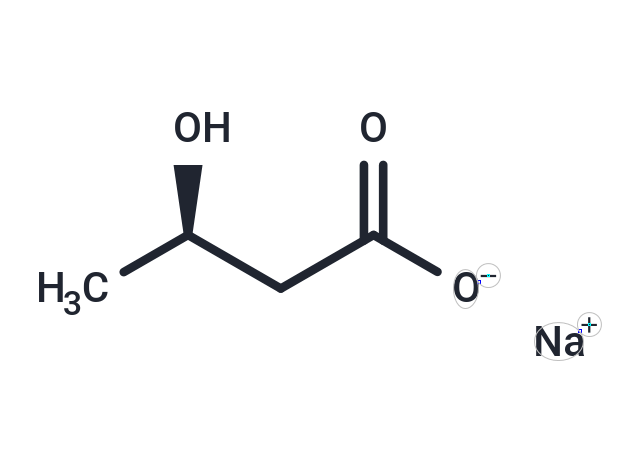
3-Hydroxybutyric acid sodium
CAS No. 150-83-4
3-Hydroxybutyric acid sodium( —— )
Catalog No. M35854 CAS No. 150-83-4
3-Hydroxybutyric acid sodium (β-Hydroxybutyric acid sodium) is a metabolite found in type I diabetic patients that regulates membrane lipids.
Purity : >98% (HPLC)
 COA
Datasheet
HNMR
HPLC
MSDS
Handing Instructions
COA
Datasheet
HNMR
HPLC
MSDS
Handing Instructions
| Size | Price / USD | Stock | Quantity |
| 500MG | 37 | In Stock |


|
| 1G | 52 | In Stock |
|
Biological Information
-
Product Name3-Hydroxybutyric acid sodium
-
NoteResearch use only, not for human use.
-
Brief Description3-Hydroxybutyric acid sodium (β-Hydroxybutyric acid sodium) is a metabolite found in type I diabetic patients that regulates membrane lipids.
-
Description3-Hydroxybutyric acid sodium (β-Hydroxybutyric acid sodium) is a metabolite that is elevated in type I diabetes. 3-Hydroxybutyric acid sodium can modulate the properties of membrane lipids.
-
In Vitro——
-
In Vivo——
-
Synonyms——
-
PathwayProteasome/Ubiquitin
-
TargetEndogenous Metabolite
-
RecptorEndogenous Metabolite
-
Research Area——
-
Indication——
Chemical Information
-
CAS Number150-83-4
-
Formula Weight126.09
-
Molecular FormulaC4H7NaO3
-
Purity>98% (HPLC)
-
SolubilityIn Vitro:?H2O : 25 mg/mL (198.27 mM; Ultrasonic (<60°C) DMSO : 16.67 mg/mL (132.21 mM; Ultrasonic (<60°C)
-
SMILES[Na+].C[C@@H](O)CC([O-])=O
-
Chemical Name——
Shipping & Storage Information
-
Storage(-20℃)
-
ShippingWith Ice Pack
-
Stability≥ 2 years
Reference
1. Hsu TT, et al. 3-Hydroxybutyric acid interacts with lipid monolayers at concentrations that impair consciousness. Langmuir. 2013 Feb 12;29(6):1948-55.?
molnova catalog



related products
-
8-Hydroxy-2'-deoxygu...
8-Oxo-dG is a good biomarker for risk assessment of various cancers and degenerative diseases.
-
Squalene
Squalene is a natural organic compound originally obtained for commercial purposes primarily from shark liver oil though there are botanical sources as well including rice bran wheat germ and olives.
-
5-Methoxytryptophol
5-Methoxytryptophol is a pineal indoleamine derived from serotonin shown to be biologically active in a number of species.
